Introduction: Search Didn’t Die | It Evolved
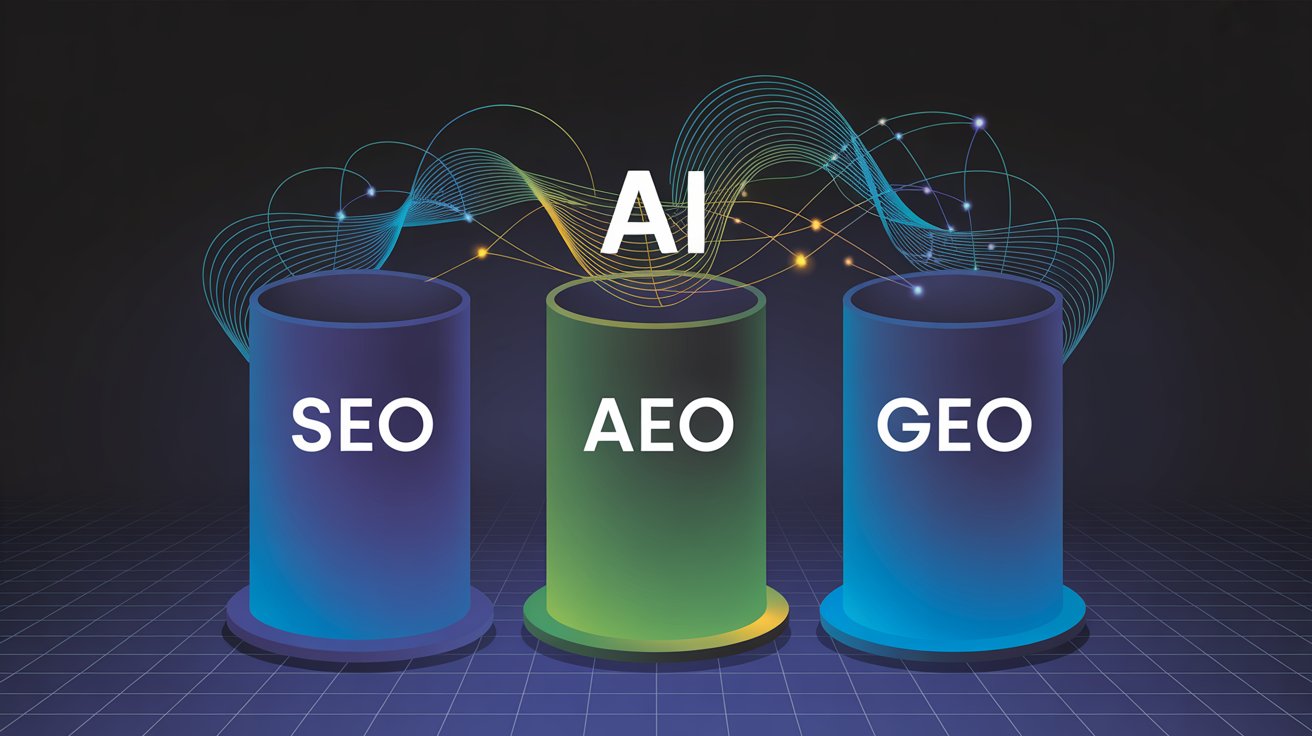
In the world of digital marketing, SEO has long been the cornerstone of online visibility. But as AI-powered search evolves, the landscape is shifting. Today, SEO isn’t enough on its own. Answer Engine Optimization (AEO) and Generative Engine Optimization (GEO) are becoming crucial to get your content found, quoted, and recommended in AI-driven environments. So, how do these three layers [SEO, AEO, and GEO] compare in the AI era? Let’s dive in.
SEO vs AEO vs GEO: What’s the Difference?
1. SEO (Search Engine Optimization): The Foundation SEO is still the starting point for visibility on search engines like Google. At its core, SEO ensures your content gets crawled, indexed, and ranked for relevant keywords. However, in today’s AI-powered world, SEO is just the first step. What SEO Focuses On: Technical optimization: Site speed, mobile-friendliness, and crawlability. Keyword targeting: Ensuring your content matches what users are searching for. Internal linking: Helping search engines understand your content’s structure. Content relevance: Offering valuable, keyword-rich content. SEO still gets your content indexed on search engines, making it visible in traditional search results. However, SEO alone doesn't ensure your content gets shown in AI-generated answers, featured snippets, or other AI-driven results. 2. AEO (Answer Engine Optimization): Getting Quoted AEO focuses on getting your content quoted directly by AI systems like voice assistants or AI-powered search platforms. While SEO ensures your page ranks, AEO makes sure your content can be easily extracted and presented as a direct answer. What AEO Focuses On: Structured content: Clear, concise formats that AI can easily parse (e.g., lists, FAQs). Featured snippets: Structuring content to be extracted and displayed in featured snippets or "People Also Ask" sections. Voice search optimization: Adapting content for voice-activated queries, where short, direct answers are preferred. How AEO Differs from SEO: While SEO helps your content rank on Google, AEO helps it get quoted in AI-generated answers and summaries. For example, a search for “What is SEO?” might pull a direct answer from your FAQ section if optimized for AEO, even if your page isn’t the #1 ranked result. 3. GEO (Generative Engine Optimization): Getting Recommended GEO represents the most advanced layer of optimization. GEO goes beyond ranking or quoting; it’s about getting recommended by AI systems when they generate answers. This is where AI’s understanding of trust, context, and clarity comes into play. What GEO Focuses On: Entity clarity: Ensuring your brand or website is well-defined and consistent across platforms. Topic depth: Creating authoritative content that comprehensively covers a subject. Trust and relevance: Ensuring content is trusted by AI platforms, often through high-quality backlinks and clear sources. How GEO Differs from SEO and AEO: SEO ensures your content is indexed. AEO ensures your content is quoted. GEO ensures your content is recommended by AI platforms based on factors such as authority, clarity, and contextual relevance. If AI doesn’t recommend your content, it won’t show up in AI-generated answers, even if it’s ranked well on Google.
Why SEO, AEO, and GEO Must Work Together
While SEO, AEO, and GEO all serve different purposes, they are interdependent. Let’s break it down: SEO helps your content get indexed by search engines and made available for AI to reference. AEO optimizes your content to be easily quoted by AI tools in direct answers or snippets. GEO ensures your content is trusted and recommended by AI when it generates responses to queries. If you focus solely on one of these, you’re leaving gaps in your visibility strategy. SEO might get you ranked, but it won't guarantee your content is quoted or recommended. AEO might get you quoted, but if your content isn't seen as authoritative by AI, it won’t get selected. GEO makes sure AI systems trust your content enough to recommend it.
How to Win Visibility in the AI Era
To succeed in today’s search and AI-driven ecosystem, brands must optimize for all three layers: SEO, AEO, and GEO. Here’s how: Create Topic Clusters: Don’t just focus on isolated pages. Build authoritative topic clusters to show AI your brand’s expertise on specific subjects. Focus on Intent: Go beyond just keywords—focus on the search intent behind those keywords and structure content to meet that intent, both for users and AI. Structure Content for Both Humans and AI: Use clear headings, FAQ sections, and direct answers that both readers and AI can easily understand. Reinforce Your Brand: Consistently present your brand entity across your site, building trust with both users and AI. The Conclusion: SEO, AEO, and GEO, A Triple Threat for AI-Powered Visibility SEO helps you get indexed. AEO helps you get quoted. GEO helps you get recommended. The brands that dominate search and AI platforms today are the ones that optimize for all three layers together. As AI continues to shape how people discover content, optimizing for SEO, AEO, and GEO is no longer optional; it’s essential.